
 Send Email
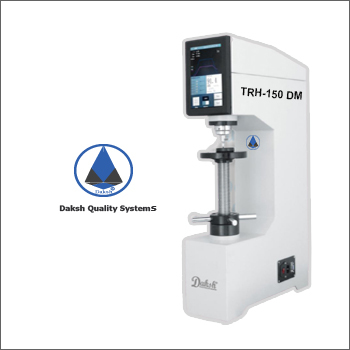
Analogue Rockwell Hardness Tester
45000 INR/Piece
Product Details:
- Number of Specimens Single test at a time
- Features Robust body, high accuracy, easy operation, long service life
- Application Metals hardness measurement, quality control
- Measuring Range 20 - 100 HRC
- Resolution 0.5 HRC
- Interface Type Manual mechanical
- Automation Grade Manual
- Click to view more
X
Analogue Rockwell Hardness Tester Price And Quantity
- 1 Piece
- 45000 INR/Piece
Analogue Rockwell Hardness Tester Product Specifications
- Max. 60 mm specimen height
- Instantaneous
- Analogue Rockwell Hardness Tester
- Controlled manually
- Bench mounted
- 220V AC, 50Hz
- 1 HRC
- Manual
- Manual mechanical
- approx. 85 kg
- 0.5 HRC
- Single test at a time
- 20 - 100 HRC
- Robust body, high accuracy, easy operation, long service life
- Metals hardness measurement, quality control
- Analogue mechanical
- 10C 40C
- Rockwell (HRC, HRB, HRA)
- Laboratory and workshop
- Approx. 150 mm
- 85% RH (operating)
- 20 - 100 HRC
- 2 mm to 60 mm height
- Max. 150 mm
- 60 mm (specimen)
- Analogue dial
- 220V AC, 50Hz
- 50Hz
- Standard test block, indenter, flat and V anvils, operation manual
- Cast iron
- 10 kgf
- Corrosion resistant paint
- Diamond cone and steel ball included
- 100 mm
- Approx. 150 mm
- 60, 100, 150 kgf
- IS:1586/ISO 6508-2/ASTM E18
Analogue Rockwell Hardness Tester Trade Information
- 15 Piece Per Month
- 3-4 Days
Product Description
Specification
- Preliminary Test Force : 98.07 N(10 kgf)
- Additional Test Force : 490.3, 882.6, 1373 N (50,90,140 kgf).
- Total Test Force : 588.4, 980.7, 1471 N (60,100, 150 kgf).
- Test Force Selection by external dialing.
- Analogue Rockwell Cum Brinell Hardness Tester, Model : RASN Features :
- Suitable for Rockwell Tests
- Preliminary Test Force : 98.07 N (10 kgf)
- Additional Test Force : 490.3, 882.6, 1373 N (50,90,140 kgf).
- Additional Test Force : 1471, 2354 N(177.5,240 kgf). forBrinell
- Total Test Force : 1839, 2452 N (187.5, 250 kgf).
- Analogue Motorized Rockwell Hardness Tester, Model : RASNM Features :
- Suitable for Rockwell Tests.
- Motorised for automatic operation cycle i.e Load/Dwell/Unload.
- Total Test Force : 588.4, 980.7, 1471 N (60,100,150 kgf).
Versatile Testing Capabilities
This Rockwell Hardness Tester supports both diamond cone and steel ball indenters, allowing examination of a wide variety of metals. It matches demanding specifications with initial and major test forces, enabling comprehensive hardness evaluation according to international standards. Its robust bench-mounted construction ensures stable and repeatable results.
User-Friendly Operation
Designed for manual control, the tester leverages an analogue dial for clear, immediate feedback. Accessories such as standard test blocks, indenter options, flat and V anvils, and an operation manual are included, streamlining setup and operation. Specimens up to 60 mm height and 100 mm overhang can be tested with ease.
Long-Term Reliability & Durability
With a corrosion-resistant paint finish and a sturdy cast iron body, the device is built for longevity in laboratory and workshop environments. Its mechanical interface and high-accuracy measurements remain reliable even in conditions up to 85% humidity and a broad operating temperature range of 10C - 40C.
FAQ's of Analogue Rockwell Hardness Tester:
Q: How does the Analogue Rockwell Hardness Tester operate?
A: The tester uses a manual mechanical interface to apply initial and major test forces with either the diamond cone or steel ball indenter. The hardness value is displayed instantly on an analogue dial, and the process is completed by manually controlling the test speed and stroke.Q: What types of specimens can be tested, and what are the size limits?
A: This tester is designed for metallic specimens with heights ranging from 2 mm to 60 mm and a test width and table diameter of approximately 150 mm. Only one specimen can be tested at a time, with an overhang allowance of up to 100 mm.Q: When should I use the diamond cone versus the steel ball indenter?
A: The diamond cone indenter is ideal for testing harder metals such as steel (HRC scale), while the steel ball indenter is recommended for softer materials like aluminum or brass (HRB scale). Selection depends on specimen hardness and required scale.Q: Where can this hardness tester be used?
A: It is suitable for both laboratory and workshop environments, thanks to its bench-mounted design and robust construction. Industries ranging from manufacturing to quality control in metalworking can benefit from its application.Q: What is the process for conducting a hardness measurement?
A: Place the specimen on the testing table, select the appropriate indenter and test force, manually apply the load, and read the hardness value from the analogue dial. Accessories included facilitate accurate alignment and measurement.Q: How does this equipment benefit quality control operations?
A: Its high accuracy (1 HRC), reliable performance, and compliance with major standards (IS:1586, ISO 6508-2, ASTM E18) ensure repeatable, traceable hardness measurements-critical for maintaining product quality and process reliability.Q: What maintenance or calibration steps are required for optimal performance?
A: Regular cleaning, proper storage, and periodic calibration-using the supplied standard test block-help maintain accuracy and extend the tester's service life. The provided operation manual outlines detailed procedures for routine maintenance.Tell us about your requirement

Price:
Quantity
Select Unit
- 50
- 100
- 200
- 250
- 500
- 1000+
Additional detail
Mobile number
Email

Other Products in 'Rockwell Hardness Tester' category

Contact Details

- "Daksh Bhawan", 12 Sector-b, Shiv Dham Behind Queens College, Khandwa Road, Indore - 452017, Madhya Pradesh, India
- Phone : 08045814517
DAKSH QUALITY SYSTEMS
COMPLETE MICROSCOPY SOLUTIONS

- Mr Naresh Sihag (C.E.O.)
- Mobile : 08045814517
- Send Inquiry
 Send Inquiry
 Send Inquiry
 Send SMS
 Call Me Free
DAKSH QUALITY SYSTEM
All Rights Reserved.(Terms of Use)
Developed and Managed by Infocom Network Private Limited.
Developed and Managed by Infocom Network Private Limited.
