
 Send Email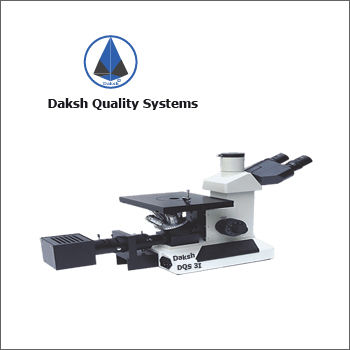
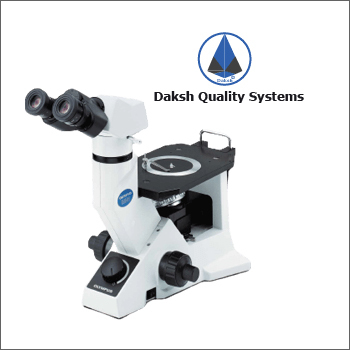
DQS-3I Metallurgical Microscope
Product Details:
- Spare Parts Fuse, halogen lamp, dust cover, power cord, immersion oil.
- Focus System Coaxial coarse & fine focusing mechanism.
- View Head Trinocular (30° inclined, rotatable).
- Features Incident light observation, ergonomic design, digital imaging capability, precise focusing system.
- Theory Reflected (Incident) light microscopy for metallurgical observation.
- Drawtube Trinocular head, 30° inclined, 360° rotatable.
- Sensor High-quality CMOS/CCD optional (for digital models).
- Click to view more
X
DQS-3I Metallurgical Microscope Price And Quantity
- 1 Piece
DQS-3I Metallurgical Microscope Product Specifications
- Approx. 380mm x 200mm x 420mm (L x W x H).
- 6V/20W halogen lamp, adjustable intensity.
- Trinocular (30° inclined, rotatable).
- WF10x/18mm, high eye-point, paired eyepieces.
- N.A. 0.9/0.13 condenser for bright field (reflecting illumination system).
- 30fps (for digital camera models).
- Plan achromatic objectives: 5x, 10x, 40x (spring), 100x (spring, oil).
- Up to 5.0 megapixels (digital camera models).
- Inclined at 30°, rotatable 360°.
- 45mm (Standard Objective Working Distance).
- 50x to 1000x (Standard with supplied objectives and eyepieces).
- Up to 1280 x 720 pixels (for digital camera models).
- 28mm (Coarse focus travel).
- Incident light observation, ergonomic design, digital imaging capability, precise focusing system.
- High-quality CMOS/CCD optional (for digital models).
- Coaxial coarse & fine focusing mechanism.
- 6V/20W halogen lamp with brightness adjustment, incident light system with reflector.
- Trinocular head, 30° inclined, 360° rotatable.
- 55-75mm adjustable.
- Reflected (Incident) light microscopy for metallurgical observation.
- JPG, BMP, TIFF (digital camera models).
- Double-layer mechanical stage, 140mm x 140mm; movement range: 75mm x 50mm.
- Fuse, halogen lamp, dust cover, power cord, immersion oil.
- 0.002mm (Precision fine focus division).
- Coarse: 28mm; Fine: 0.002mm graduation.
- USB 2.0 (for camera attachment).
- Up to 2592 x 1944 pixels (for digital camera models).
- X/Y Axis with Mechanical Control
- Foam Lined Cardboard Box
- 0.1mm Graduation
- Blue, Green, Yellow, Neutral Gray Included
- Heavy Cast Iron Base
- 0C to 40C
- Industrial Evaluation, Metallurgical Analysis, Quality Control
- Approx. 12 kg
- AC 220V/50Hz or 110V/60Hz
DQS-3I Metallurgical Microscope Trade Information
- 15 Piece Per Month
- 3-4 Days
Product Description
Product details
| Focusing | Coaxial Focusing System With Slides Traveling On Ball Bearing Guide Ways, For Friction less Motion |
| Nosepiece | Inner Locating on Ball Bearing |
| Observation Head | Trinocular head, Compensation (inclination 30 deg C) |
| Power | 20 W |
| Voltage | 6 V |
| Size | 150 mm x 200 mm |
| Model Name/Number | DQS-31 |
Precision and Versatility for Metallurgical Analysis
Built with a robust double-layer mechanical stage and mechanical X/Y axis control, the DQS-3I microscope is designed to handle demanding material analysis and industrial evaluations. The included filters and plan achromatic objectives ensure clear, high-contrast images, while the incident light system supports detailed inspection of opaque specimens. Its flexible power supply and rugged construction make it a reliable tool for continuous lab or workshop use.
Digital Imaging Capabilities
Selectable high-quality CMOS or CCD sensors are available on digital models, delivering images at resolutions up to 5.0 megapixels. The USB 2.0 interface allows fast, easy data transfer for further analysis or archival. Still images can be captured in JPG, BMP, or TIFF formats, while video recording is supported at up to 1280 x 720 pixels and 30fps, facilitating comprehensive documentation and remote sharing of observations.
Ergonomic and Accurate Focusing System
The coaxial coarse and fine focusing systemwith travel ranges of 28mm and 0.002mm respectivelyenables effortless and precise adjustments for sharp, detailed observation. The microscopes 30 inclined, 360 rotatable trinocular head reduces operator fatigue, making it suitable for extended sessions needed during industrial quality control and metallurgical analysis.
FAQs of DQS-3I Metallurgical Microscope:
Q: How is the DQS-3I Metallurgical Microscope utilized in quality control processes?
A: The DQS-3I microscope is extensively used in quality control for analyzing metallurgical samples, assessing surface structures, and verifying material compositions. Its high magnification, precise focusing, and incident light system enable accurate observation of material flaws or inconsistencies, ensuring that manufactured components meet stringent industry standards.Q: What are the benefits of the heavy cast iron base and ergonomic design?
A: The heavy cast iron base provides exceptional stability, allowing for vibration-free imaging, which is essential during high-magnification observations. The ergonomic trinocular head, inclined at 30 and rotatable 360, offers comfort and flexibility for users, significantly reducing fatigue during lengthy inspection sessions.Q: When should I use the different color filters included with the microscope?
A: Color filtersblue, green, yellow, and neutral graycan be fitted to enhance contrast and clarity when viewing specular, opaque, or highly reflective samples. Selecting the appropriate filter based on your sample type can help reveal specific structural details and improve image quality during metallurgical analysis.Q: Where can digital imaging features of the DQS-3I be beneficial?
A: The digital imaging capabilities, such as high-resolution still and video capture with CMOS/CCD sensors, are particularly useful in documentation, remote quality assessments, research presentations, or archiving analysis results. These features enable sharing findings with colleagues or clients efficiently.Q: How is focusing achieved, and why is precision important for metallurgical observation?
A: Focusing is managed via a coaxial coarse and fine mechanism, allowing both rapid sample positioning (28mm coarse range) and ultra-precise clarity (0.002mm fine range). Precision focus ensures accurate visualization of microstructures or imperfections critical in metallography and industrial quality assurance.Q: What should I know about the microscopes operating environment and maintenance?
A: The DQS-3I can be operated in temperatures from 0C to 40C, ideal for standard laboratory or workshop conditions. Routine maintenance includes using the supplied dust cover, replacing fuses and halogen lamps as needed, and storing the device in its foam-lined packaging when not in use to protect sensitive components.Tell us about your requirement

Price:
Quantity
Select Unit
- 50
- 100
- 200
- 250
- 500
- 1000+
Additional detail
Mobile number
Email

Other Products in 'Metallurgical Microscope' category

Contact Details

- "Daksh Bhawan", 12 Sector-b, Shiv Dham Behind Queens College, Khandwa Road, Indore - 452017, Madhya Pradesh, India
- Phone : 08045814517
DAKSH QUALITY SYSTEMS
COMPLETE MICROSCOPY SOLUTIONS

- Mr Naresh Sihag (C.E.O.)
- Mobile : 08045814517
- Send Inquiry
 Send Inquiry
 Send Inquiry
 Send SMS
 Call Me Free
DAKSH QUALITY SYSTEM
All Rights Reserved.(Terms of Use)
Developed and Managed by Infocom Network Private Limited.
Developed and Managed by Infocom Network Private Limited.
